
Deep tech at London Tech Week
At London Tech Week, we’ve been part of the conversations about how the UK can build on its strengths – taking what we do well and becoming global leaders.
The Royal Academy of Engineering Enterprise Hub's Director, Ana Avaliani, reflects on the key takeaways and insightful conversations she was apart of.
Europe does not have an innovation problem, it has a translation problem. We are exceptionally good at generating breakthrough research, technical talent and ambitious startups. We are far less good at turning those strengths into globally significant companies and enduring commercial and industrial advantage. Europe already has many of the ingredients needed for deep tech leadership. Having those ingredients is not the same as turning them into lasting advantage.
Insights from:
- Dr Hermann Hauser, Co-founder and Venture Partner, Amadeus Capital
- Simon Fabri, CEO, HMGCC
- Jarek Rzepecki, CEO, Monumo
As Hermann Hauser said during the panel, the UK remains one of Europe’s strongest technology ecosystems, and London is still a major centre for venture capital, talent and entrepreneurship. Add to that the growing strength of places like Paris, Munich and Cambridge, and it is clear that Europe has real depth. The challenge is that too often these strengths operate in parallel rather than as part of a bigger, connected system. If we are serious about building a true deep tech backbone, we must think beyond individual technologies and focus on how they work together.

Ana Avaliani, Director of Enterprise
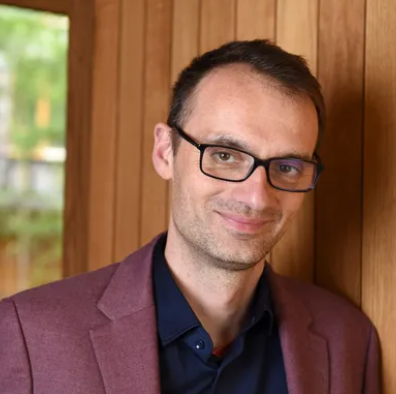
Jarek Rzepecki, CEO, Monumo
The scale-up challenge
One of the clearest points raised in the discussion was that Europe’s biggest challenge is no longer starting companies. It is helping them grow. As Hermann noted, European universities generate research at levels comparable if not superior to those in the United States, and Europe produces a significant number of startups. The bottleneck appears later.
His line summed it up perfectly: “We don’t have a startup problem. We have a scaleup problem. ”Too many promising companies reach a point where they require substantial growth capital and international support, only to relocate, sell early, or seek funding elsewhere.
That creates a real paradox: Europe helps create many of the technologies shaping the future, but still captures too little of the value they generate. Closing this gap will require significantly larger pools of growth capital, stronger institutional investment and greater confidence from home grown investors in backing companies through their most ambitious stages of growth.
Why experience matters
Jarek Rzepecki brought in another important perspective: for founders, the challenge is not only capital, but experience. The UK continues to produce exceptional engineering talent. Companies such as Monumo benefit from access to world-class software, AI and hardware expertise across regions including Cambridge and the Midlands.
What is much harder to find are leaders who have actually taken deep tech companies all the way from startup to global category leader. That experience can only be developed by doing it.
That is why the panel pointed to Arm as the kind of success story Europe needs more of, not just because of what the company achieved commercially, but because of the ability of successful companies to create ecosystems around them. Founders become investors, early employees go on to build new ventures, and the lessons learned from scaling get passed on. Building Europe’s deep tech backbone will require more companies making the journey from startup to global market leader.
Magdalena highlighted the impact of coaching, particularly early on. Beyond business frameworks, coaching helped her to develop confidence and clarity in her leadership. That personal development, she noted, shaped how she now thinks about building a team and leading a company.
For many applicants, this is an overlooked benefit. Building a venture is not just a technical challenge, it is a personal one.
Rethinking risk and ambition
The discussion also touched on a broader cultural difference between Europe and the United States. While access to capital remains a factor, Jarek suggested that European founders and investors often display a greater tendency toward early exits and risk mitigation.
Silicon Valley, by contrast, has built a culture that expects and backs extraordinary scale. The issue is not whether one approach is inherently better than the other. Rather, it is that ecosystems become stronger when large successes generate future successes.
Europe needs more founders ready to build enduring global businesses, and more investors prepared to back that level of ambition.
Government as an innovation partner
Another part of the discussion focused on the role government can play in helping innovation move faster. Simon Fabri shared how HMGCC has sought to transform traditional procurement through a co-creation model that focuses on problems rather than specifications.
Instead of asking companies to respond to a predefined brief, HMGCC works with startups and SMEs to shape solutions collaboratively, especially in areas that sit at the intersection of commercial opportunity and national security. This approach delivers several benefits. It enables startups to access government customers, accelerates innovation cycles and allows companies to retain ownership of their intellectual property.
Perhaps most importantly, it creates stronger links between government priorities, technological innovation and private investment.
For deep tech ecosystems to thrive, access matters. Historically, national security and government innovation programmes have been difficult for smaller companies to navigate, particularly where security clearance requirements create barriers to engagement.
Simon explained how HMGCC is increasingly trying to translate sensitive challenges into broader, unclassified problem statements, opening the door to a much wider pool of innovators while still protecting what needs to stay protected. The result is access to technologies and ideas that might otherwise never reach government users.

Simon Fabri, CEO, HMGCC
Technology sovereignty requires more than software
As the conversation turned to Europe’s strategic future, the focus widened from software to infrastructure. While Europe possesses the talent to develop alternatives across many software domains, the panel identified advanced semiconductor manufacturing as a more pressing challenge.
AI, cybersecurity, robotics and high-performance computing all depend on access to advanced compute infrastructure. Europe has strong capabilities in chip design. Manufacturing remains a far greater challenge.
The bottom line is that if Europe wants a resilient deep tech ecosystem, it has to strengthen the foundations that make every other technology sector possible.
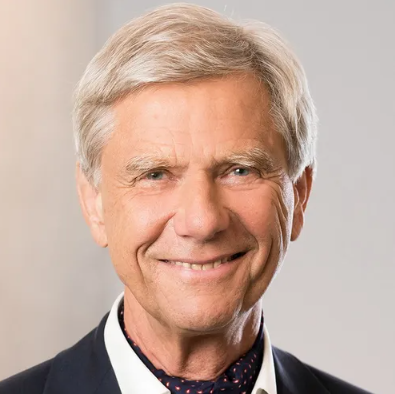
Dr Hermann Hauser, Co-founder and Venture Partner, Amadeus Capita
So, what would success look like?
Unsurprisingly, the answers were different but closely connected. For Simon, it meant stronger, better connected innovation clusters bringing together academia, startups, government, corporates and investors around strategic technologies. For Jarek success means creating more globally significant technology companies capable of reaching valuations measured in hundreds of billions rather than millions. And for Hermann, it meant finally closing Europe’s scale-up funding gap and building the investment infrastructure needed to keep world-leading companies here.
From fragmentation to integration
If there was one conclusion I took from the discussion, it is this: Europe does not need more rhetoric about innovation. It needs more staying power. That means backing companies for longer, reducing friction between research and market, opening up access to customers, and being far more serious about the infrastructure that underpins strategic technologies.
The UK has a major role to play, but only if we stop treating deep tech success as a series of isolated wins and start building the conditions for repeatable scale. The real test is whether we are prepared to hold our nerve long enough to build. That is what a deep tech backbone really requires.
Browse more

Scaling the business starts with you
An alumni panel from our scale up programme discuss the challenges of scaling a high-growth start up and how the programme impacted them.

More than a milestone: what being named the UK’s top startup hub really means
The Enterprise Hub being named the UK’s top startup hub by the Financial Times and Statista is an incredible honour. But more than a milestone, it’s a moment to reflect.