
When you’re building something new, whether that’s a breakthrough technology, a deep-tech startup, or a bold idea still taking shape, you face a constant choice: play it safe, or step into the unknown. For three recent graduates of our Enterprise Fellowships, that leap has been transformative.
- Arielle Torres, CEO and co-founder of Pipeline Organics, is developing enzymatic fuel cells to power food and beverage facilities with clean, continuous electricity.
- Dr Ugur Tanriverdi, CEO and co-founder of Unhindr, is revolutionising prosthetic comfort with a new metamaterial that adapts to the body’s natural changes throughout the day.
- Matthew Moore, founder of DroneTector, is creating high-resolution radars to detect and track drones.
All three came from research backgrounds and used the Enterprise Fellowships to move from 'groundbreaking technology' to 'investable business'.
Fresh from completing the programme, they reflected on why they chose Enterprise Fellowships with the Enterprise Hub, and how it changed the trajectory of their businesses.
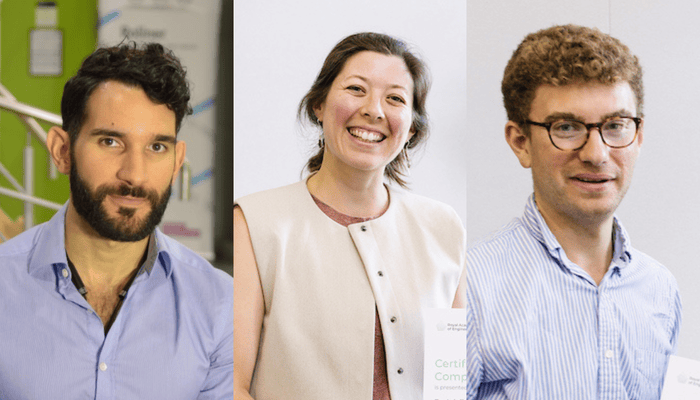
Being surrounded by other founders solving tough problems was invaluable. Some were ahead of me and could offer advice, others were at similar stages and facing the same challenges. That peer community and the value I got from it wasn’t something I’d anticipated
Why choose Enterprise Fellowships?
For Ugur, the decision was years in the making.
“I’d had my eye on this programme since 2019. The Royal Academy of Engineering’s prestige and connections open doors you can’t easily unlock elsewhere. And unlike many accelerators, Enterprise Fellowships offers generous, non-dilutive funding, support without taking equity.”
Arielle was looking for something that understood the reality of building deep tech, not just another generic startup bootcamp.
“The engineering specialism set Enterprise Fellowships apart. Most other accelerators lean towards software. Plus, the Academy’s network; hundreds of potential mentors, advisors and collaborators that can support you at every stage.”
What was the most unexpected thing about the programme?
Matthew expected expert tuition and mentor access, but not the depth of peer support.
“Being surrounded by other founders solving tough problems was invaluable. Some were ahead of me and could offer advice, others were at similar stages and facing the same challenges. That peer community and the value I got from it wasn’t something I’d anticipated.”
Ugur agreed, highlighting not just camaraderie, but quality.
“The cohort has been sincere and collaborative; we still meet quarterly. And the calibre of training surprised me. Even topics I thought I knew were delivered in a way that made me truly understand their meaning.”
What was the biggest learning?
Each founder experienced a significant shift in how they make decisions.
For Arielle, the standout learning was structured problem-solving.
“The programme gave us tools to get to the root of problems quickly, and to bring the team along in that process. Even something as simple as sticky-note exercises encouraged input from quieter voices and avoided echo chambers.”
Matthew’s shift was in customer engagement.
“Talk to customers as early as possible, but also learn how to do it well. Before Enterprise Fellowships, we pursued funding for a version of our idea without that deep customer validation. In hindsight, it was never going to work.”
Both founders emphasised a move towards a deeper, more rigorous understanding of what customers actually need.
How has Enterprise Fellowships impacted your work?
All three founders experienced significant strategic shifts during the programme.
Arielle shifted from investor-led thinking to customer-driven validation.
“Before Enterprise Fellowships, we spoke mostly to investors and partners. Now, we systematically test assumptions, technical and commercial, with a wider customer base. It’s about de-risking the business long-term.”
Ugur moved from simply seeking a buyer to maximizing the company's valuation for an eventual exit.
“Originally, everything was geared towards finding a quick sale. Enterprise Fellowships inspired me to focus on the inputs that drive deal value: growing sales and attracting customers. We have interested parties for an exit, but now we are having those discussions with a much stronger business behind us.”
Matthew’s customer strategy also evolved.
“Our first target customer and our sales approach both changed, driven by a better understanding of the market and a stronger commercial vocabulary.”
How much time does a place on Enterprise Fellowships really take?
A frequent question from would-be applicants is whether the programme can be done “on the side”.
Ugur estimates Enterprise Fellowships activities took the equivalent of four days per month, but stresses that this is core founder work, not an add-on.
“As CEO, your job is business development. This isn’t extra admin; it’s the work that grows your business. The more time you invest, the faster it grows.”
Arielle saw it as a chance to step away from firefighting.
“I welcomed time away from daily fires to focus on strategic thinking. Yes, you need to manage team communication and inbox overload, but the space to think is worth it.”
The consensus: the commitment is real, but it directly supports business growth rather than distracting from it.
Is Enterprise Fellowships right for you?
Arielle’s advice is simple.
“You’ve got to try it. Like research, entrepreneurship is about tackling the unknown, solving problems, and pushing boundaries. If there’s a problem you can’t stop thinking about, explore it; you’ll regret it more if you don’t.”
Matthew adds a reality check.
“It’s hard work, sometimes unpleasant. But Enterprise Fellowships gives you a year’s salary, support, and space to figure it out. If you’re nervous but motivated, it’s perfect. If you’re fundamentally unsure, maybe not.”
You’ve got to try it. Like research, entrepreneurship is about tackling the unknown, solving problems, and pushing boundaries. If there’s a problem you can’t stop thinking about, explore it; you’ll regret it more if you don’t
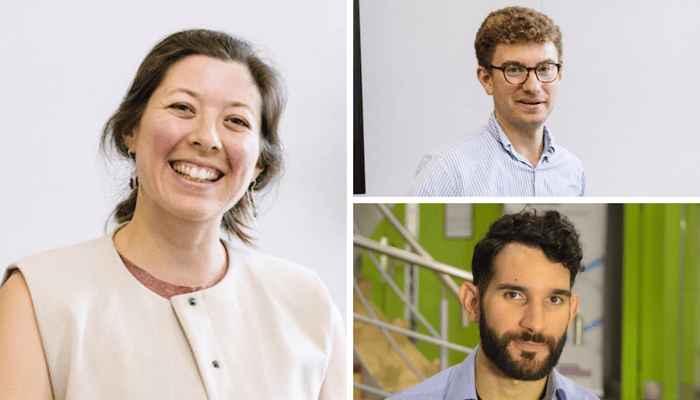
Before Enterprise Fellowships, we spoke mostly to investors and partners. Now, we systematically test assumptions, technical and commercial, with a wider customer base. It’s about de-risking the business long-term.
One final piece of advice for applicants
Arielle:
“Apply, even if you’re not sure you’ll get in, you’ll get feedback. Take every opportunity and use your network. If someone offers to review your deck or application, accept.”
Ugur:
“If you want it, put full effort into the application. Once in, commit wholeheartedly to the cohort, you’ll get out what you put in.”
Matthew:
“When writing your application, don’t just explain the tech, explain why anyone should care. Show the problem you’re solving and the impact you can make.”
Enterprise Fellowships isn’t just funding, it’s a shift in mindset, a toolkit for structured growth, and a peer group that challenges and supports you. For these founders, it turned uncertainty into opportunity, and set their ventures on stronger, more customer-focused paths.
Watch the full online discussion in this webinar recording
Find out more and start your application
Enterprise Fellowships
Turn your engineering innovation into a successful company The round is now closed Get In Touch