
There’s something uniquely energising about being immersed in a new innovation ecosystem - especially one as ambitious and coordinated as France’s. In March, we led a life sciences delegation from the Royal Academy of Engineering Enterprise Hub as part of our Explore programme. Over five packed days in Paris and the wider Île-de-France region, we dived into one of Europe’s most dynamic deep tech markets—engaging with corporates, investors, incubators, government agencies, and fellow founders.
Our cohort featured five outstanding UK-based founders leading bold, IP-rich engineering ventures: ACT Medical, BeCertain, Nebu-Flow, Rezon, and DeepMirrorAI. They came with big ambitions—and left with fresh perspectives, tangible connections, and a clearer understanding of how their technologies could thrive internationally.
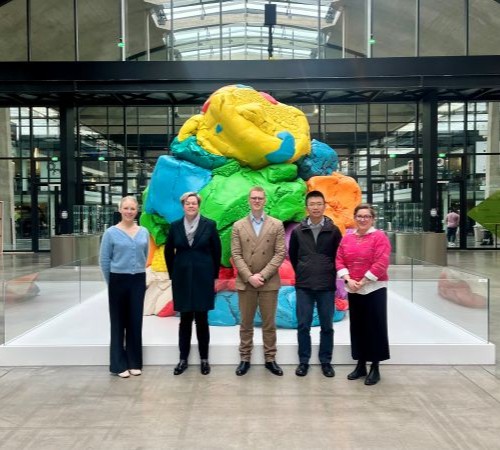
A coherent national strategy for deep tech
What stood out immediately was the strategic coherence of France’s approach to deep tech.
Led by its national innovation bank Bpifrance, the French government is backing the sector not just with capital—via grants, loans, and equity—but through a system-wide strategy that connects research, talent, corporates, and funding.
We had the privilege of attending an exclusive session on Bpifrance’s six-year DeepTech Plan, part of the broader France 2030 initiative. It was clear: this is more than just a funding stream—it’s a full-scale mobilisation of the ecosystem.
From quantum to biotech, medtech to AI, France is investing at speed in frontier sectors, with remarkable clarity and continuity. For UK deep tech founders, especially those in R&D-intensive sectors like life sciences, this offers not only resources—but also predictability and scale.

France’s life sciences strength: Infrastructure meets ambition
The mission made one thing clear: France is a serious player in life sciences.
With world-class clinical trials infrastructure, robust health data systems, and internationally recognised regulatory frameworks, France is an ideal environment for health-focused deep tech startups.
The country also produces thousands of top-tier graduates each year in biotech, bioengineering, and pharmaceutical sciences—providing a strong talent pipeline whether you're looking to recruit, collaborate, or expand operations.
We saw a growing trend of corporates engaging with startups earlier and more openly—with dedicated innovation arms, investment vehicles, and co-working labs built for genuine collaboration rather than control.
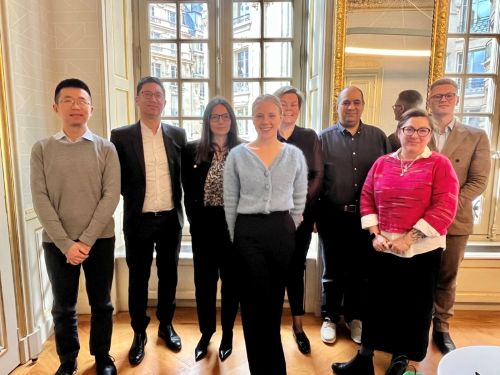
Paris-Saclay: A research-driven ‘Silicon Valley’
Our visit to the Paris-Saclay innovation cluster was particularly revealing.
Combining top-ranked universities and grandes écoles, major corporate R&D centres, and startup infrastructure like BioLabs France, Paris-Saclay offers a tightly connected innovation ecosystem.
One highlight was our visit to Spartners by Servier, a collaborative space where startups are embedded within a pharmaceutical environment. Working side-by-side with researchers, clinicians, and commercial teams, these ventures benefit from proximity, rapid validation, and the acceleration that close collaboration enables.
Explore: more than a market visit
Our Explore programme is designed to do more than introduce UK founders to a new market. It helps them test ideas, challenge assumptions, and build global ambition.
What sets Explore apart is the blend of structure and serendipity. Yes, there are targeted investor roundtables, ecosystem briefings, and curated meetings—but there’s also space for peer learning, lateral thinking, and creative insight that often only happens when you’re away from the day-to-day.

Why it matters now
In today’s connected world, deep tech ventures don’t scale in isolation. They need ecosystems, networks, and structured opportunities to go global.
Missions like this help founders build social capital—the critical relationships and knowledge that enable expansion, investment, and strategic decision-making. Whether you're validating a market entry plan, exploring cross-border partnerships, or preparing for international investment, these experiences matter.
France ticks all the boxes—and is eager to collaborate. Despite broader geopolitical shifts, there is strong appetite for UK engagement, especially in areas where we lead: translational science, early-stage commercialisation, and technical entrepreneurship.
Ready to explore?
If you're building a deep tech company in the UK and looking to explore international opportunities, our Explore programme offers a powerful launchpad. Backed by the Royal Academy of Engineering’s credibility, connections, and expertise, each mission is tailored to help ambitious ventures go global.
We’re committed to supporting our Hub Members to scale internationally. If that sounds like you, get in touch.
Browse more articles
Meet our Nominations for the Earthshot Prize
Let us introduce you to some of the incredible engineering organisations we have put forward as official nominators for…
Raising, Regulation and Risk
We partnered with Sifted to pull together an expert panel to dig into some of the challenges raised in our recent Royal…